Posted on

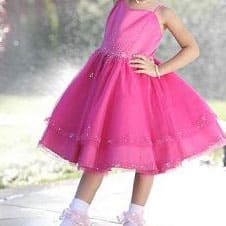
Why do girls like pink?

strong> with which to create a pink complement for the little one of the house. And it doesn’t matter what it is, as long as it’s child-friendly and most importantly, PINK!
So we asked ourselves why this is so and consulted the great source of information on the Internet to see if we could get an explanation.

Below, we detail the conclusions we have reached.
Mainly there are two ideas: the one we all know that leads us to believe that it is the work of the marketing and advertising that influences the girls to be attracted to this color; although we have discovered some curious things like that, according to the historian Jo B. Paoletti,  prior to World War I in the United States, for example, no pastel shades were used for babies but simply white. Later they began to take these colors but blue was for the girls because it was more “delicate and kind” and pink for the boys because they considered it “determined and strong”. This distinction could also be seen in Europe although the criteria varied from country to country. In France, pink was already used for girls and blue for boys. However, in Germany, Belgium or Switzerland, it was the other way round and the trend would not change until the 1920s, becoming definitively widespread in the 1970s.

In the 80s, pink completely displaced other alternatives as a colour trend in products for girls. In the 80s, pink completely replaced other alternatives as a colour trend in products for girls, reaching our days, when, according to the aforementioned historian, there is much more differentiation by sex than in previous centuries.

And the other idea, developed by the University of Newcastle (United Kingdom), in which a study carried out on 208 British men and women, among whom 37 Chinese men and women who had just arrived in the United Kingdom, discarded the cultural influence, showed that although in general men and women preferred the colour blue, women showed a clear predilection for lilac and pink tones; And they concluded that this chromatic preference went back to the first humans when men hunted and women gathered, developing a natural instinct that identified those pink and reddish tones with the maturity of the fruits.

We will conclude that maybe there is some biological cause in the fact that girls love the color pink but it is more likely that we have turned a natural fact into a cultural one and that together with the strong advertising influence has resulted in the situation we talked about at the beginning of this post:
-“My girl wants something pink.”
– “What?
-Never mind. -Pink it…
Posted on

How to differentiate a natural pearl from an artificial one?

Here>>

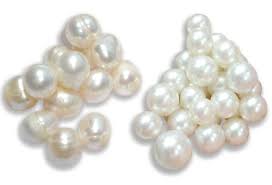
PERLA 1

In this post, we want to give you the keys to differentiate between authentic and imitation pearls and not to be given “a free ride”, because between them, besides the physical differences, there is an economic difference more than evident.

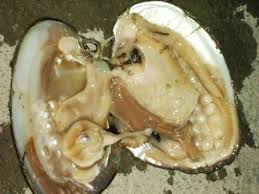
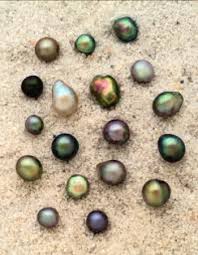
We will begin by knowing that a natural pearl is created inside a mollusk (mainly bivalves), when any strange particle slips into the soft interior of the animal and this covers it with mother-of-pearl giving rise to spheres of different sizes, colors and shapes. As we explained in the post dedicated to mother-of-pearl a few days ago.

The authentic pearls can be natural or cultivated. These last ones suppose more than 90% of the total of authentic pearls of the market, since the difference between both is the action or not of the man in its creation.

Natural pearls are conceived in an accidental way as a consequence of the chance of nature, whereas cultivated pearls are also born inside a mollusc following the same process but, in this case, the development is carried out in pearl farms where the human being intentionally places the organic or synthetic nucleus inside the bivalve. Process initiated by the Japanese at the end of s. The process was initiated by the Japanese at the end of the 19th century, making the collection of natural pearls almost disappear.

Having said this, we will now list the different tests we will carry out on each pearl to see if they are authentic.

PERLA 2

1.- The surface of real pearls is not smooth. If we rub them together or against our teeth we will notice friction, that is to say, they will not slide easily, besides noticing a sandy and imperfect touch that will leave a certain whitish powder because of having rubbed them.

2.- Real pearls are not perfect spheres, totally round; therefore if you roll them their trajectory will not be linear but unbalanced.

3.-The hole of natural or cultivated pearls is usually sharper while those of imitation have it more rounded.

PERLA 3

5.- Real pearls are heavier compared to their size. Imitation pearls are much lighter, even more so if they are plastic and the weight will be directly proportional to their size.

6.- Finally, we advised like unequivocal test of authenticity, to examine the pearls with a magnifying glass or a microscope would be the perfect thing because there yes that we can verify the own imperfections of the authentic pearls.
And that was all. We hope, as always, that you found it interesting.
See you soon…

Posted on

A fashion earring for any event

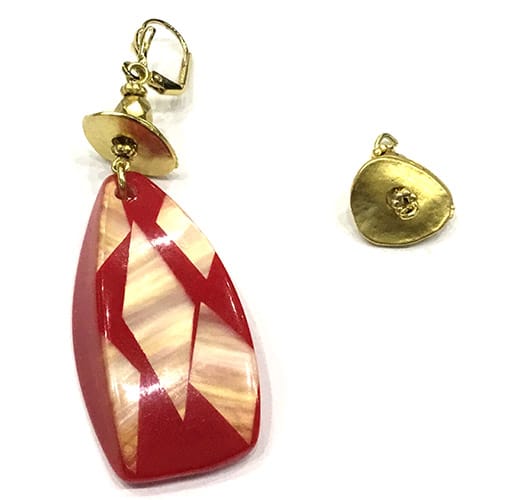
Good artists, today we want to show you how to make a new model of earring  so that you go ideal to any event that may arise.

IMG_1805

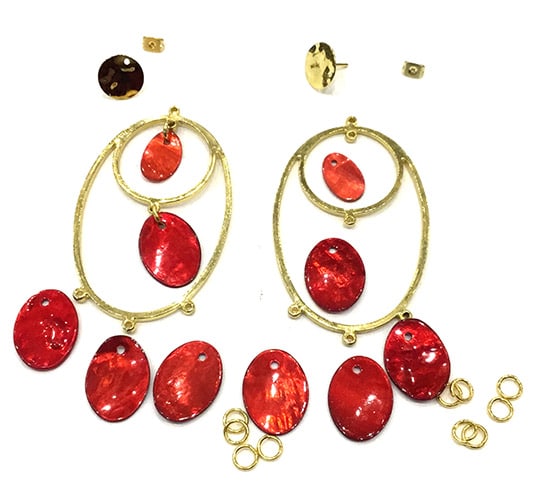
This model is composed by:
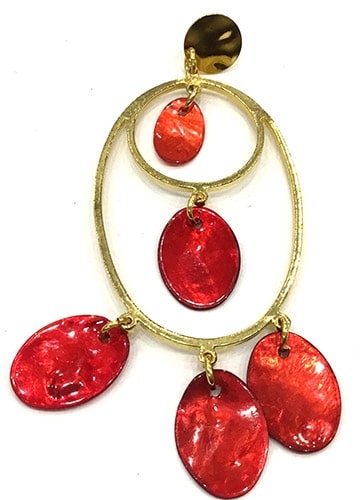
– Two tears of red resin with golden beads.
– Two medium sized sticks with a ring.
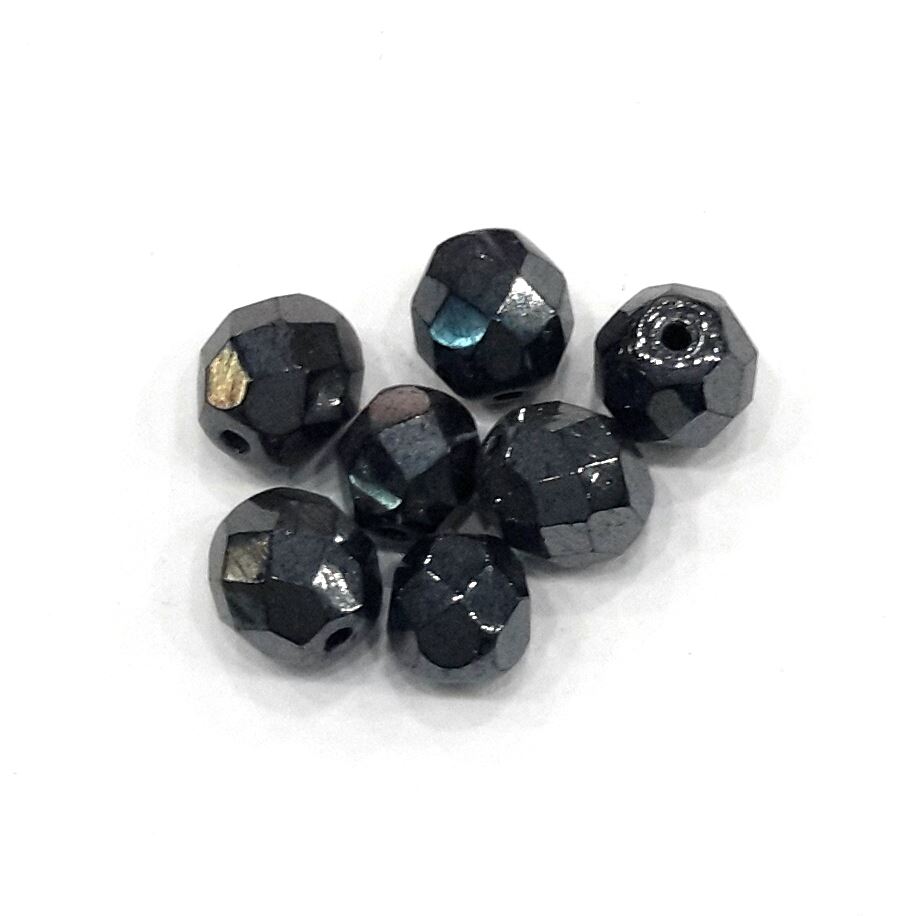
– Two glossy golden Czech glass beads, size 8 mm.
– Two rondels of Turkish gold.
– Four smaller rondels also made of Turkish gold.
– Two clasps for Catalan type earrings.
– Two rings model 32005 in shiny gold.


Steps to make this slope

Step 2: Join by means of the ring 32005 the resin piece with the composition made in STEP 1.

Step 3: Put the earring hook to the rest of the composition by means of the ring that has the Catalan earring hook.
We hope you liked it, good night.

Posted on

Do you know what it is… the Brass?


TYPES OF BRASSES:

Type 1:FIRST TITLE BRASS ( zinc less than 34 %).
TYPE 2: SECOND TITLE BRASS ( zinc of 33-44%).
TYPE 3: THIRD TITLE BRASS ( zinc more than 44%)
brass 2

The brass used in jewellery has 15% zinc.
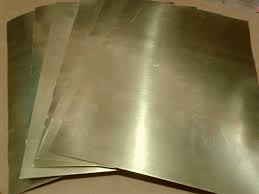
Brass is easy to machine, punch and cast, hence its widespread use in the jewellery industry. It is also resistant to oxidation, to saline conditions and is very malleable so it can be rolled into very thin sheets. Its malleability varies according to composition and temperature. In the case of the brass furniture it is very easy to mould at room temperature so these pieces have this added value in the creation of accessories.

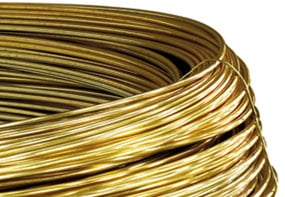
Originally the brass has a golden color, which will shine if we polish it, quality by which also it is used in jewelry shop and goldsmith’s shop although we presented/displayed it mostly bathed reason why you can find it in shining gold, old gold, white bronze etc.

Other uses of this metal are in armaments, boilermaking, welding, the manufacture of coins and wind musical instruments, the construction of boats because it is not attacked by salt water and for its antimicrobial action, is used for the doorknobs of hospitals.

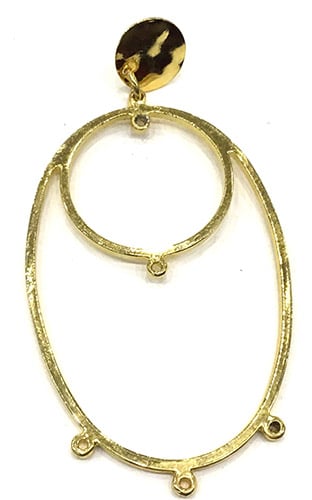
Among the various brass fittings we offer, we can find rings, sticks or canes, earring hooks, omega clasps, some chains and filigree bases.

We hope you liked it… See you tomorrow!

Posted on

Did you know it’s… mother-of-pearl?

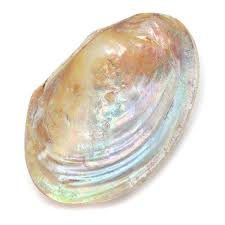
nacre, also known as “mother of pearl”, is a hard, white, iridescent substance that is formed inside the shell of some mollusks and that produces shines and tones of different colors when it reflects the light; it is composed of calcium carbonate, organic matter and water and it is used for the creation of ornamental objects.
NACAR 1

In this way the mother-of-pearl sheets are directly extracted or small objects are introduced into the shell where the mollusc, to protect itself, covers them with this substance creating what we know as pearl pearls.

Although nowadays there are already mechanisms for the manufacture of artificial mother-of-pearl, the use of this natural material to create jewels and adornos, goes back to the Egyptians, Visigoths, Iberians, there are even samples in ancient China and Mexico where the Yaqui Indians manufactured necklaces with pendants of mother-of-pearl that they thought protected them from all evil.

NACAR 3
The creation of accessories and mother-of-pearl accessories reaches its maximum splendour during the reign of Elisabeth I of England (Baroque, mid 16th – early 17th century)  and begins to decline with the Industrial Revolution (19th century) when technological advances completely transformed the textile sector where it was widely used. Already in the middle of the 20th century, scientific research made possible the creation of plastic materials that imitated this natural substance, thus saving the exhaustion of natural deposits.

Today, the natural is a trend. That which is close to nature, which is little treated, is taken away. That’s why we are using again in the confection of complements which is our thing, beads of pure or natural materials; or that imitate them. Among them, there is mother-of-pearl.  We offer it in different shapes such as discs, ovals, flowers, hearts, both natural and in colors as pendants, small tears to paste, and crushed, widely used in the manufacture of flamenco accessories. </In this last case, the iridescence of natural mother-of-pearl is non-existent, as it is produced by the layers of air contained in each plate of mother-of-pearl formation, breaking down the light into its 7 colours, causing the effect of the northern aurora. NACAR 5

If you want to discover what this jewel of nature looks like, you can find it here
As always, we hope you liked the post and that you dare to create your complement with personalized mother-of-pearl.
Until the next artist…

Posted on

Zamak tube bracelet (Video)

ABALORIO DONUT

NECESSARY MATERIALS:
– A 40 mms zamak tube
– 45 cms of blue suede
– 12 mm zamak flat disc.
– A 3 mms zamak jacket
<https://www.vindastore.com/producto/abalorio-donut/”>20 high quality glass doughnuts.

span style=”font-size: 12pt;”>iframe src=”https://www.youtube.com/embed/0rqVypIeYwI” width=”560″ height=”315″ frameborder=”0″ allowfullscreen=”allowfullscreen”>

What did you think of the bracelet? Now you can combine it with the colors you want and put the tube that you like. 

span style=”font-size: 12pt;”>We’ll just say goodbye for today… Greetings!

Posted on

Do you know what it is.. Alpaca?

We continue with the cycle of “Metals” and in today’s post, we talk about one of the most used metals in manuals and making jewelry, the ALPACA./h2>
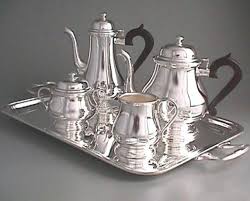
This material is an alloy of zinc (8-45%), copper (45-70%) and nickel (8-20%) which results in a metal of similar colour and brightness to silver. For this reason, it is also called German silver, new silver or argentine.

alpaca-01

It was originally called “maillechort”, as this alloy was invented by the French Maillot and Chorier around 1819, in response to the need to use a cheaper and less sensitive metal than silver for the manufacture of cutlery and other tableware.

alpaca-02

Like all alloys, its quality is determined by the quantity of each of its components. The best quality will be that in which more than half of the composition is copper (if not, it cannot be considered alpaca) and the parts of zinc and nickel are more or less proportional (17%-18%; 26%-22%).

Among its properties we highlight its durability and malleability. It is very resistant to abrasion and corrosion, only sulphur can stain it but it does not oxidize easily. It is also a very malleable metal, due to its copper content, though resistant thanks to zinc. Hence, its use in manuals and complements.

alpaca-03

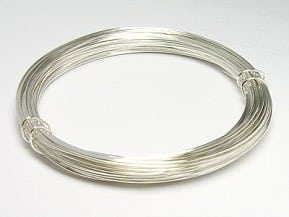
Although you can find in the market fornitures made in alpaca, since this material can be stamped and forged; we present it in its more habitual version, in form of wire.

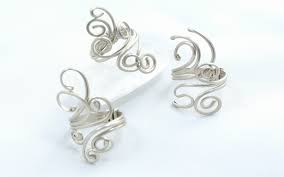
With this wire, besides making all the compositions that you can think of to create tiaras, crowns, adornos to incorporate in other creations, etc., you can make your own hooks for earrings, rings, sticks and thus give it the form and the size that you need.

>a href=”https://www.vindastore.com/en/beads/beads-and-jewelry-supplies/jewelry-wires/”>Here  you can see our alpaca wires in the different thicknesses we work them: 0.30mm, 0.40mm, 0.60mm, 0.80mm and 1mm.

To conclude, we must tell you that the thicker we choose the wire will be harder and less malleable.
We hope you liked it… See you next time.